Monday, January 14, 2013

MUSEUM TREASURES on a Smaller Scale (c) By Polly Guerin

While tourists and die hard New Yorkers seems to flock to the great museums, we also have an abundance of smaller museums that are often overlooked. Why not plan a day to take in the exhibitions, where your space is not invaded and you have all the time to enjoy the collections without the jostling crowds. Here’s the Scoop!!!

NATIONAL MUSEUM OF MATHEMATICS Can mathematics be fun? You bet and Glen Whitney has come up with a formula to prove it. Mr. Whitney, a mathematician and former hedge-fund algorithm manager, raised $22 million to create The National Museum of Mathematics, nicknamed MoMath---it opened recently on East 26th Street facing Madison Square Park. It’s a museum full of surprises, the ideal venue for study and entertainment for young mathematicians and anyone who is fascinated with a world that tests you imagination. Tricycles will roll on square wells, clear plastic cubes, will reveal hexagonal cross-sections and little cars on movable racetrack will reach their destinations on routes that are not straight. The centerpiece of the museum is the columned structure called the Matenaeum, where you approach what looks like a crystal ball, and design your own three dimensional shapes. Visitors discover new things every day. Tickets purchased online cost $15 adults and $9 for children, students and seniors.                                                                                                                                                                        
ROOMS OF WONDER, from Wunderkammer to Museum, 1599-1899 at The Grolier Club. In the 16th Century, European collectors filled special room or cabinets with miscellaneous conglomerations of items, including paintings and drawings; plant specimens; animals (including monstrosities); shells and coral; fossils, coins and medals; gold and silver objects, musical and scientific instruments and automata; the occasional Egyptian mummy and other rare and curious artifacts. Many of these “Cabinets of Curiosities” or Wunderkammer were put together by physicians, botanists and apothecaries—they were a status symbol, celebrating the wealth and intellectual power of their owners. Some of the most famous ones, for example were owned by nobles in the Medici and Hapsburg dynasties, and one the greatest Wunderkammers was formed by Peter the Great of Russia. Proud owners of Wunderkammers published elaborate illustrated catalogs to document their collection, which often ended up from private venues in public museums. At The Grolier Club, 47 East 60th street, through Feb. 2.                                                                                                                                                
CENTER FOR THE HISTORY OF COLLECTING is an institution even more rarefied than any of the great museums. It is actually part of The Frick Museum, which is another wonderful oasis of serenity in a busy city. Most of the interest here is in the form of auction catalogues and photographic reproductions and for the serious collector it is a treasure trove of information. The Center for the History of Collection are organizing a symposia involving banks as collectors---from the Medici’s to the Rockefellers including a cast of other notables, the Lehmans, Morgans and Rothchilds. The Center’s most important function is as a repository for images and records about collectors, dealers and specific works of art, going back hundreds of years and the Center has started an oral history project in which collectors are interviewed.  At the Frick Art Reference Library, 10 E. 71st St., 212.547.0641.                                                                              
THE MUSEUM OF RECLAIMED URBAN SPACE, MoRus,  A shrine to the East Village struggle, has been erected as something of a homage to the drama that ensued around throughout the 80s and 90s. The museum opened last month, offering tours, discussions and artwork about the neighborhood’s semi-recent radical history. Eric Drooker, the artists behind some of the most iconic images of the East Village’s era as a squatter’s haven, was on hand recently to relived some bygone moments. There were thousands of hard-core punk-rock shows there---it’s a place that has leveled off from the days when there were shooting alleys for crack addicts. Drawings by the artist Fly, of former squatters, also presented and shared stories. Parties, riots and relationships can be relived here, that is if you’re up to recalling those turbulent days. At C-Squat, 155 Avenue C, between 9th and 10th streets. www.morus.

Ta Ta Darlings!!! I’m off to visit the Cabinet of Curiosities at the Grolier Club, shouldn’t you? Fan mail welcome at pollytalk@verizon.net. Polly’s Blogs are best accessed at her website pollytalk.com. Just click on the link in the left-hand column for visonarymen, womendeterminedtosucceed, poetry or fashion.


Monday, January 7, 2013

CULTURAL VENUES WARM UP THE CHILL OF WINTER (c) By Polly Guerin

New York serves up a bounty of cultural venues to warm the chill of winter. Step inside and visit museum treasures and exhibitions to stir your imagination and cultivate your muse. Here’s the scoop!!!
GEORGE BELLOWS Here’s one for the men!!! Regarded in his day as one of America’s greatest artists, George Bellows (1882-1925) is remembered for his powerful depictions of boxing matches and New York City tenement life. He also painted seascapes, war scenes and portraits and his lithographs and illustrations addressed social, political and cultural issues. The Metropolitan Museum of Art is featuring some 120 works from his extensive oeuvre and invites the viewer to experience the dynamic and challenging decades of the early 20th century through the eyes of a this brilliant observer. His candid portrayals of Maine’s rugged coast, boxers in the ring, the atrocities of World War I, friends and family, and other distinctive themes are on view through February 18th.
CIRCUS and the CITY: NEW YORK, 1730-2010 Explores how the vibrant urban landscape of New York City contributed to the emergence of the circus as a popular form of entertainment and the unique contribution of the Big Apple to the circus becoming a leading cultural phenomenon in the United States. The circus arrived in New York City through the tunnels and streets intermingling with urban life. It left an indelible mark in the memories of the city dwellers. More than 200 works on loan from thirty-one collections evoke the wonder and spectacle of the circus and demonstrate why it has captivated audiences for more than two centuries. The lecture Jan 10th: A History of Circus Clowning explores the reciprocal relationships between clowns and their culture. AT Bard Graduate Center: Decorative Arts, Design, History at 18 West 86th St. Trough Feb. 3.
INVENTING ABSTRATION: 1910-1925 MoMA explores the advent of abstraction as both a historical idea and an emergent artistic practice with an exhibition of more than 350 artworks in a broad range of mediums—including paintings, drawings, prints, book, photographs, recordings and dance pieces—that represent a radical moment when the ruses of art making were fundamentally transformed. A key premise of the exhibition is abstraction’s role as a cross-media practice from the start. This notion is illustrated through an exploration of the productive relationships between artist, composers, dancers, and poets in establishing a new modern language for the arts. Trough April 15 at The Museum of Modern Art, 11 W. 53 St.
FANTASY and INVENTION: Rosso Fiorentino. The emergence of Mannerism in Florentine Renaissance art, as exemplified by the brilliant painter Rosso Fiorentino, is the subject of a new exhibition which runs through February 3 at the Morgan. The show includes the artist’s extraordinary painting, Holy Family with the Young Saint John the Baptist, as well as a selection of drawings printed books, letters and manuscripts by other Florentine masters. Using the Holy Family as a starting point, Fantasy and Invention traces the Florentine iteration of Mannerism through some 20 drawings from the Museum’s collection: five autograph documents and letters from leading artists of the day, including Michelangelo. At Madison Avenue, between 36 and 37th streets.
Ta Ta Darlings!!! There are so many rich cultural choices this week! Fan mail welcome at pollytalk@verizon.net. Polly’s Blogs are best accessed at her website pollytalk.com. Just click on the link in the left-hand column for visonarymen, womendeterminedtosucceed, poetry or fashion.


Monday, December 17, 2012

IT'S A DICKENS CHRISTMAS IN TINSEL TOWN (c) By Polly Guerin

Oh Christmas Tree, Oh Christmas Tree you ignite the holidays all aglow, and an old fashioned Christmas welcomes everyone to celebrate the goodness that the Christmas brings with renewed hope, joy and love. Only in New York my dears, Only in New York. Here’s the scoop!!!

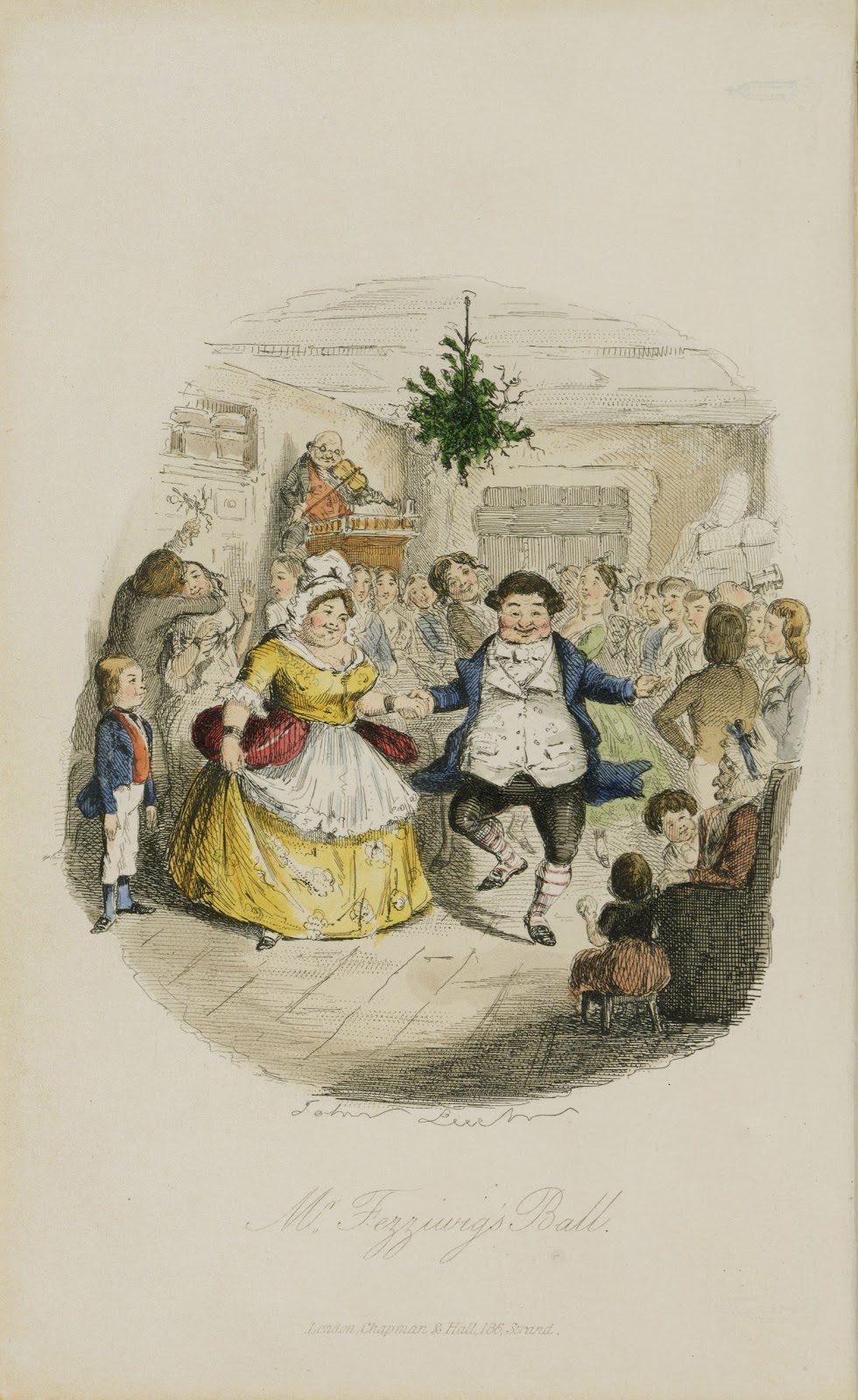
CHARLES DICKENS’S A CHRISTMAS CAROL Every holiday season, The Morgan Library & Museum displays Charles Dickens’s original manuscript of A Christmas Carol in the museum’s history library. Although Dickens wrote his iconic tale in a six-week flurry of activity, beginning in October 1843, the story still captivates the imagination of an old-fashioned celebration with conviviality and dancing. He wrote it in time for Christmas publication and had the manuscript bound in red morocco as a gift his solicitor, Thomas Mitton. The manuscript passed through several owners before Pierpont Morgan acquired it in the 1890s. During your visit travel back to Valley Forge on Christmas day, 1777, explore the impact of the handwritten manuscript of Truman Capote’s comical early story, A Christmas Vacation, and discover how the modern American concept of Santa Claus was shaped by Clement Clark Moore’s poem, Twas the Night Before Christmas. Through January 13, 2013. 225 Madison Ave, at 36th Street. Open Christmas Eve and New Year’s Eve.

CHARLES DICKENS: The Key to Character Celebrates the power of Dickens’s characters to be imagined ever anew, examining important precedent for his art of characterizations as well as intersections between his personal life and his literary creations. His fictional creations represent a cross-section of society from law-clerk to crossing-sweeper, miser to midwife all united by the vividness with which they are described. The exhibit at the New York Public Library, Schwarzman building at 42nd Street and Fifth Avenue emphasizes how these characters, talk, dress and move. The exhibition features artworks by nearly thirty illustrators, including unpublished watercolors—along with rare translations, original sheet music, and the memoranda book the author used to jot down possible names for characters. Also on display is the 1867 pocket diary containing the code with which Dickens communicated with his mistress Ellen Ternan, along with audio-visual stations featuring unusual recordings from the period collection of the Library for the Performing Arts. Now through January 27th.

CHRISTMAS TREE and NEAPOLITAN BAROQUE CRECHE A long-standing yuletide tradition in New York the Metropolitan Museum of Art present the Christmas tree and Neapolitan Baroque Crèche on view now through January 6th. The brightly lit, 20-foot blue spruce---with a collection of 18th-century Neapolitan angels and cherubs hovering among its boughs and groups of realistic crèche figures flanking the Nativity scene at its base---will delight one and all in the Museum’s Sculpture Hall. Set in front of the 18th –century choir screen from the Cathedral of Valladolid, with recorded Christmas music in the background and daily lighting ceremonies…is a breathtaking tree of historical significance, not to be missed. The Museum will be open on two special Holiday Mondays December 24 and 31 from 9:30 to 5:00 pm. Lighting ceremonies on those dates will take place at 4:30 pm.

THE HOLIDAY TRAIN SHOW at The New York Botanical Garden in the Bronx is back with more trains and landmarks than ever before. Within the enchanting setting of the Enid A. Haupt Conservatory, model trains zip over bridges and past replicas of New York landmarks made of plant parts such as nuts, bark, and leaves. Show favorites include the original Yankee Stadium, The Statue of Liberty, Brooklyn Bridge and even the Collectors Club in Murray Hill. Bar Nights at the Holiday Train Show let you get into the holiday spirit while sipping a complimentary signature cocktail. To round out this holiday outing with a the Bar Car Nights ticket also provides discounts and offers for partner restaurants in Little Italy’s Arthur Avenue nearby. Hop on the Metro North train at 42nd Street and get off at the Botanical Garden stop, a mere 25 minute ride from midtown Manhattan.

Ta Ta Darlings!!! My favorite is the Neapolitan tree at the Met!!! Fan mail welcome at pollytalk@verizon.net. Polly’s Blogs are best accessed at her website pollytalk.com. Just click on the link in the left-hand column for visonarymen, womendeterminedtosucceed, poetry or fashion.


Monday, December 10, 2012

FASHIONISTA'S HOLIDAY HAPPENINGS (c) By Polly Guerin

The glitz and glamour of fashion steals the holiday spotlight bringing with it a chance to take a diversion and revisit fashion at various venues around town. It’s the Best of New York, my friends, the very best!!! Here’s the scoop!!!!

FASHION and TECHNOLOGY A new exhibition in the Fashion and Textile History Gallery at The Museum at the Fashion Institute of Technology (MFIT) presents a fascinating review of how fashion has engaged with---and been altered by---technological advancements throughout history. Spanning 250 years, the exhibition is displayed in chronological order with a focus on technological innovations that had had an impact on the production, materials and function of fashion. The exhibit includes objects as diverse as an afternoon dress, circa, 1860, produced using synthetic dyes that resist fading, and Pierre Cardin’s seamless dress from 1968 that showcases his pioneering ‘Cardine’ textile. Also on view is Jean Paul Gaultier’s 1996 jumpsuit that utilizes the aesthetic of the “Cyber Age” as a decorative motif, and the LillyPad Arduino circuitboard, which allows designers to push the function of clothing further by integrating smart electronics directly into their garments. Free and Open to the Public. On view through May 2013. At 27th Street & Seventh Avenue. Image: Jean Paul Gaultier, jumpsuit, mulicolored nylon and spandex with Op-Art cyber graphic print, 1996, France.

125 ICONS Celebrates the work of Pratt alumni and faculty staged at the school’s Manhattan location at 144 West 14th street, and covers the past 125 years dating back to Pratt’s inception. Fashion’s favorites include snapshots of Norman Norell’s designs, as well as actual ensembles by Betsey Johnson and Jeffrey Banks. It was Pratt alumni, Kermit Love, who dressed Big Bird by figuring out the feather application for Jim Henson’s big-beaked friend. You’ll also see images of cartoon characters Betty Boop and Tom and Jerry, a 1995 Ford Thunderbird, Charles Lindberg’s ‘Spirit of St. Louis’ airplane and the Chrysler Building among the Pratt-related designs on display. More on view include Vera Maxwell’s ultrasuede dress, a “Fantasia” video with Bill Garrity’s sound engineering. The venue tells the history of art, design and architecture in America, just with the creations that Pratt produced. Worth your time! Ongoing.

DESIGNING TOMORROW: America’s World’s Fairs of the 1930s Breadlines and raging unemployment were a hard reality during the height of the Great Depression, but the world’s fairs of the 1930’s provided a spectacular diversion. Six American world’s fairs presented streamlined cars, models of skyscrapers, electric toasters, nylon stockings, and television, providing a vision of a brighter future for tens and millions of Americans. Visitors to the exhibition at the Museum of the City of New York will see sleek, modern furniture and appliances, vintage footage from the fairs, and futuristic drawings of the New York World’s Fair buildings, both built and proposed from advertising to architecture and domestic innovations and furnishings, all of the fairs’ most popular and recognizable attractions. Samples of tubular steel furniture, models of streamlined buses, and image of cities filled with light and color all illustrate the creativity and hope these fairs came to represent. At the Museum of the City of New York (MCNY) 103rd St and 5th Ave. Opened Dec. 5.

THE EVENT OF A THREAD is Ann Hamilton’s large-scale interactive installation at the Park Avenue Armory where visitors will be able to hear live performers reading aloud, or listen to the sound on portable radio transmitters as they walk through the armory. Inside the Drill Hall take a leap into the future and hop onto swings that hang from the trusses of the cavernous space; your movement swill rustle a giant piece of fabric, generating a massive kinetic sculpture, a flock of homing pigeons, spoken and written texts and transmissions of weight, sound and silence weave through this expansive space to create a fabric of experience. Open to the Public till January 6 at Park Avenue Armory, 643 Park Ave., at 67th street. Admission $12/$10 for students, Seniors, Groups. Tues.-Sun. 12pm-7pm. Closed Mondays, except December 24 and 31.

Ta Ta Darlings!!! It’s time to hop on a swing at the Park Avenue Armory. Fan mail welcome at pollytalk@verizon.net. Polly’s Blogs are best accessed at her website pollytalk.com. Just click on the link in the left-hand column for visonarymen, womendeterminedtosucceed, poetry or fashion.


Monday, December 3, 2012

REVISITING ZELDA FITZGERALD (c) By Polly Guerin

The mixed media of cultural venues warms the chill of the holiday weather to do nothing better than to get indoors and revisit Zelda Fitzgerald. It’s the best of New York, my friends, the very best. Here’s the Scoop!!! Photo Image: Edwin Cahill and Gardner Reed by Carol Rosegg.

ZELDA AT THE OASIS The riveting new drama by P.H. Lin transports use back to tormented life of Zelda Sayre Fitzgerald, the wife of the legendary American novelist, F. Scott Fitzgerald. Portrayed by the glamorous, one and only Zelda, Gardner Reed imbues the role with spit-fire imagery while Edwin Cahill in the role of the bar man, emerges as the ghost of Scott and in other guises becomes Zelda’s ballet teacher and even her mother. The director Andy Sandberg keeps the interaction of these stellar performers synergistically meshed into high drama.

Set on a magical night in the 1930s, Zelda (Reed), engagingly dressed in a stunning evening dress, is ensconced in a New York City bar called The Club Oasis, where she escapes to drink alone…until a unique and unexpected friendship is forged with an aspiring musician who plays the piano and tends bar at the Oasis. Zelda wants nothing more than to be recognized as an artist in her own right but two things stand in her way: a growing mental instability and the overbearing shadow of her husband. Reed is the personification of Zelda and captivates with her dramatization of the tragic heroine. Vivid and haunting memories are triggered as Zelda transforms the Bar Man (Cahill)into those from her past who have shaped her self-image. Encounters with the ghost of her husband Scott add to the sad lament of her yearning to be published and recognized as an author. Reed is making her New York debut as Zelda, albeit a memorable one and Cahill as the bar tender demonstrates his versatility in role playing in this after-hours encounter. In the Club Oasis they share their dreams, missteps, and insights with one another, hoping to unlock the courage to go forward in their lives.

The show opens on Tuesday December 4th at 7pm at St. Luke’s Theater, 308 West 46th St., with shows also on Fridays at 5 pm and Tuesdays at 7 pm (with an additional performance on Sunday Dec. 9 at 7 pm.) Tickets $59.50 and $37.50 are available through Telecharge.com or call 212.239.6200.

Read Polly's Blog on Zelda at amazingartdecodivas.blogspot.com
Ta Ta darlings: Don’t miss seeing that riveting performance, Zelda at the Oasis. Fan mail welcome: pollytalk@verizon. Polly’s blogs are best accessed at pollytalk.com just click in the left hand column for a direct link to visionary men, amazing women, poetry or fashion.

Monday, November 26, 2012

HOLIDAY EXHIBITIONS DAZZLE (c) By Polly Guerin

The holiday spirit dazzles and delights the onlooker but nothing soothes the mind more than an art gallery exhibition to remind us that cultural pursuits far outshine the decorations. Here’s the scoop!!!

Tokyo 1955-1970: A New Avant-Garde is the first museum exhibition to focus on the city of Tokyo during the remarkable period from the mid-1950s through the 1960s, when the city transformed itself from the capital of a war-torn nation into an international center for arts, culture, and commerce. The exhibition encompasses many mediums—including painting, sculpture, photography, drawings, graphic designs, architecture, video and documentary film representing over 200 works by more than 60 artists and art collectives. In conjunction with the exhibition, MoMA presents a performance program that brings together four contemporary artists and artist groups, based in Japan and New York. The performance series takes place in January and February 2013, in various places around the museum. The Museum of Modern Art, through February 25, 2013, 11 W. 53rd St. Image: Yokoo Tadanori: Diary of a Shinjuku Thief, 1968 screenprint. The Museum of Modern Art, Gift of the Designer.
MATISSE: In Search of True Painting. Henri Matisse, one of the most acclaimed artists working in France, throughout his career questioned, repainted and reevaluated his work. Fascinated by the artistic process he once hired a photographer to document the evolution of his paintings and then conceived an exhibition that juxtaposed finished works with pictures of their earlier incarnations. The Metropolitan Museum of Art’s Matisse: In Search of True Painting exhibition presents this particular aspect of Matisse’s painting process by showcasing 49 vibrantly colored canvases as well as a selection of sculptures and works on paper from a series titled “Themes and Variations.” Dec. 4, 2012 through March 13, 2013. 1000 Fifth Ave.
FERDINAND HODLER: View to Infinity. The Neue Galerie presents the first major New York museum show to focus on the late work of Ferdinand Hodler (1853-1918), the premier Swiss artist of the early twentieth century. The exhibition includes portrait paintings, majestic Swiss landscapes, incisive self-portraits, and the moving series of works chronicling the illness and early death of the artist’s lover, Valentine Gode-Darel. The artist’s landscapes have been described by one critic as “mystical celebrations of light and color.” Hodler attributed symbolic meaning to colors, "Blue is the color that, like the sky, like the sea, speak to me of all that is translucent and magnificent.” Through January 7, 2013. Neue Galerie New York at 1048 Fifth Avenue at 86th Street.
Polly’s Movie Pick of the Week: HYDE PARK on HUDSON. Bill Murray as Franklin D. Roosevelt and portrays the political life of the American Legend with charm and conviction. Roosevelt’s love affairs are another matter of interest; some exploits as never portrayed before.
Ta Ta Darlings!!! Hodler is worth the trip uptown and then, of course, there is the Café Sabarsky for afternoon tea. Fan mail welcome at pollytalk@verizon.net. Polly’s Blogs are best accessed at her website pollytalk.com. Just click on the link in the left-hand column for visonarymen, womendeterminedtosucceed, poetry or fashion.


Monday, November 19, 2012

THANKSGIVING LEGEND (c) By Polly Guerin

As we celebrate Thanksgiving 2017 there are so many more reasons to be thankful and as a reminder it was Sarah Josepha Hale, a petite crusader in crinoline, who was the pioneering champion who inspired President Lincoln to declareThanksgiving a national holiday.
HALE’S LETTER WRITING CAMPAIGN
Sarah Josepha Hale’s relentless handwritten letter campaign spanned a period of almost three decades in which she urged that Thanksgiving be declared a national holiday. With tireless zeal she penned thousands of editorials and wrote handwritten letters to prominent, citizens, governors and went right to the White House, addressing the issue to United States Presidents. She never gave up on her campaign which had roots in the country’s unification.
CIVIL WAR UNIFICATION
As the dark days of the Civil War divided the country into two armed camps Mrs. Hale’s editorials became more vigilant. who wouold listen to a lone woman with her persistent plea for "just one day of peace amidst the blood and strife"? Eventually she came to see the nationalization of Thanksgiving not only as a day for counting our blessings, but as a logical bond of union, one more means of drawing the sympathies of the country together. Year after year without typewriter Hale continued to pour out her handwritten letters, which were sent to influential people urging them to join in establishing Thanksgiving the last Thursday in November.
LINCOLN DECLARES THE HOLIDAY
With the country gripped in the North and South divide, Mrs. Hale’s concept of unity finally caught the attention of one man in the White House. Prompted by a letter she had written to Secretary of State William Seward in 1863 President Lincoln recognized the urgency for unification and issued a proclamation appointing the last Thursday in November as a day of national Thanksgiving in America.
HALE, THE LADY EDITOR
Sarah Josepha Hale succeeded at a time when there were few opportunities for working women to escape the drudgery of domesticity. In addition, like other women of her era, she had been denied a formal education but found refuge in her father’s library, self-educating herself. After her husband died, leaving her penniless, she wrote and published a novel, Northwood, which captured the attention of a Boston publishing firm. She was offered editorship of one of their periodicals in 1836 and at the age of 40, with five children to support, she left her home town of Newport, New Hampshire and moved to Boston to assume the post of Lady Editor. Running one of the most powerful magazines in the country did not escape critics, but she always explained that she was forced to hold down a job to feed her children.
ARBITER OF WOMEN’S ISSUES
Sarah Josepha Hale, as Lady Editor, was the arbiter of parlor etiquette, fashion, manners and intellect. As a journalist, lobbyist, career woman and crusader in crinoline she spoke her mind and succeeded where others had failed. A petite woman, she dressed in the crinoline style of the 1800s. However, even in this cumbersome attire and the restrains of society she championed numerous women’s issue bringing about a number of important improvements in the lives of women in the Victorian era. She was the first to advocate women as teachers in public schools. She demanded for housekeeping the dignity of a profession and put the term “domestic science” into the language. Sarah Josepha Hale was to prove to be unique exception of her times.
AUTHOR OF MARY HAD A LITTLE LAMB In addition, she helped to establish Vassar College, the first college for women. Hale was civic minded and among her credits she promoted the movement to preserve Mount Vernon as a National memorial and raised the money that finished Bunker Hill Monument. She was the author of some two dozen books and hundreds of poems, including the best known children’s rhyme in the English language, “Mary Had a Little Lamb.”
Sarah Josepha Hale stepped from the shelter of an early nineteenth century marriage untrained, unschooled and stepped forward to become the nation’s most celebrated Lady Editor. For her patriotic part in nationalizing Thanksgiving Day, we give thanks.